Rosacea is a skin condition where your face appears flushed or red with visible blood vessels. Additionally, small pus-filled bumps may be present, resembling acne or other skin issues.
Rosacea typically affects the nose and cheeks but can also involve the eyes, leading to irritation, redness, or watery eyes. There's no cure for rosacea, but treatment options exist to manage and reduce the signs and symptoms.
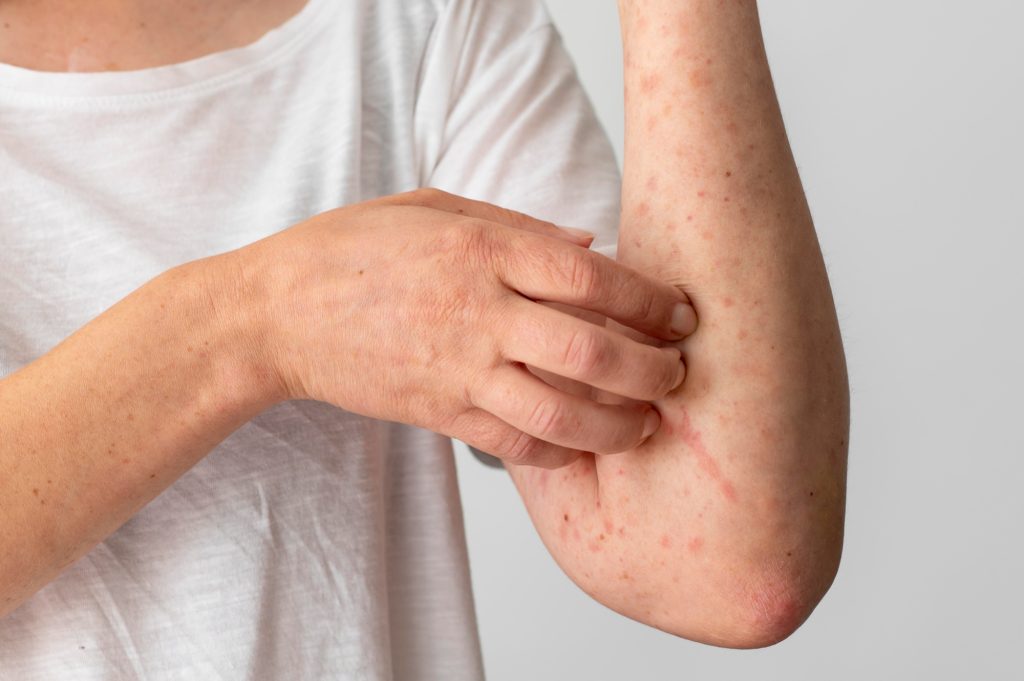
Eczema is a common inflammatory skin condition characterized by itchiness, dry skin, rashes and dry patches. This condition weakens your skin’s barrier function, which is responsible for retaining moisture and shielding the body from external elements.
Apart from that, eczema can cause one to scratch due to itchiness, causing damage to your skin's surface and potentially resulting in infections.
Fungal infections refer to diseases or conditions caused by a fungus, often affecting the skin, hair, nails or mucous membranes, and sometimes other parts of the body. You’re at higher risk for fungal infections if you have a weakened immune system.
These infections on or within the skin may appear red, swollen, or bumpy, resembling a rash, or they might manifest as a visible lump under the skin. Fungal infections in nails can lead to discoloration (yellow, brown, or white), thickening, or cracking.
Warts are small, grainy skin growths that occur most often on your fingers or hands caused by viral infections. You are more likely to get them if there is a breakage or wound on your skin and then you come in contact with contaminated surfaces. People with weakened immune systems are more susceptible to the virus that causes warts.
Hives, also known as urticaria, are red and itchy bumps on your skin. They can arise due to various reasons, including exposure to an allergen or a physical trigger, such as pressure from tight clothing.
Therefore, it is important to identify what triggers urticaria and avoid them as it differs from person to person but unfortunately, it can be challenging to do so as one may have multiple triggers.
Psoriasis is a long-lasting disease in which the immune system becomes overactive, causing rapid multiplication of skin cells. Normal skin cells completely grow and shed in a month.
With psoriasis, skin cells do this in only three or four days and instead of shedding, the skin cells pile up on the surface of the skin leading to the formation of plaques and scales appearing on any part of the body, although they are commonly found on the elbows, knees, and scalp.